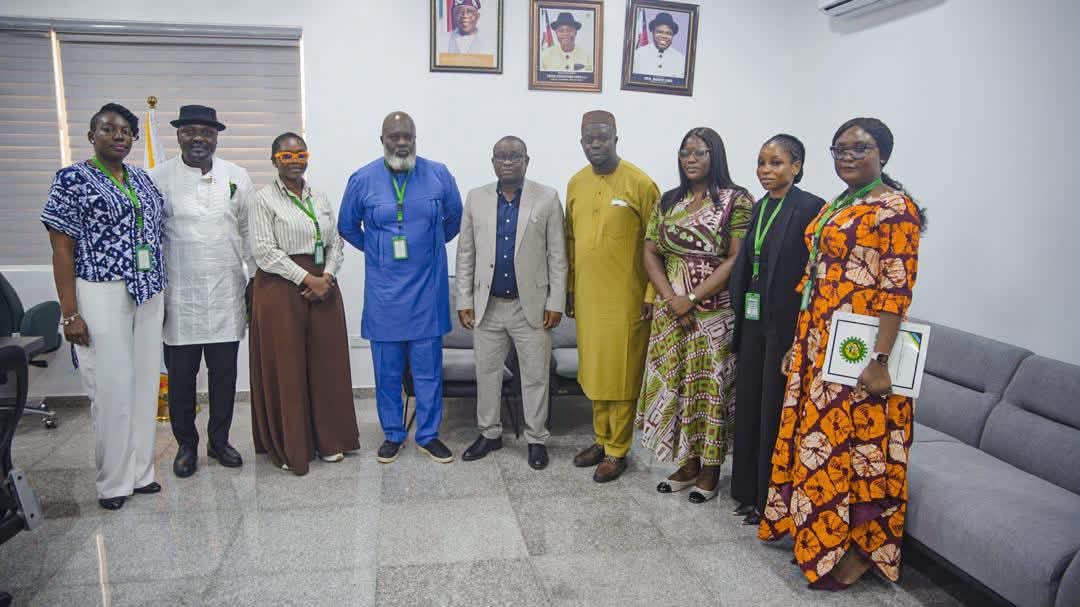

Minister of State for Petroleum Resources (Oil), Senator Heineken Lokpobiri, has said that ongoing reforms in the oil and gas sector under President Bola Tinubu have raised crude oil production from less than one million barrels per day to 1.824 million barrels per day.
Lokpobiri stated this in Yenagoa at a breakfast meeting with media practitioners led by Elder Asu Beks, themed “Counting the gains of the oil sector reforms.”

According to him, the growth, which represents over 80 per cent increase since 2023, was achieved through coordinated efforts led by the President.
He said at the time he assumed office, Nigeria had less than 10 active rigs, with most producing wells drilled in the 1960s and 1970s and no visible seismic activity for over 20 years.
“As of today, we have over 70 active rigs. That shows enormous activity and investment returning to the sector,” he said.
The minister disclosed that Nigeria had no investment for over 10 years before this administration, as stated by the CEO of TotalEnergies in Rwanda, but now accounts for 60 per cent of oil and gas investments destined for Africa.
He said the decision to approve divestment requests by Shell and ExxonMobil was pivotal. He explained that Shell’s onshore assets to Renaissance and ExxonMobil’s assets to Seplat were delayed by the previous administration, stalling investments in Bonga North, Bonga HI, Bonga South-West and Zabazaba.

He said indigenous operators now contribute about 60 per cent of national production, compared to 90 per cent previously by IOCs, adding that some have increased production by over 100 per cent after acquisition.
On fuel subsidy removal, the minister argued that it saved Nigeria from going the way of Venezuela, which despite having over 300 billion barrels of reserves, remains poor due to unsustainable policies.
He said the country was spending N18.4 billion daily on subsidy at N448 per dollar, amounting to about $41 million daily and $15 billion annually, translating to about N21 trillion annually at N1,400 per dollar.
He said the gains are evident in the rise of FAAC disbursements from less than N600 billion to over N2 trillion monthly, reduction of debt service from 97 per cent to about 60 per cent, growth of foreign reserves to $55 billion, the highest in almost 30 years, and return of NNPCL to profitability and ability to meet cash-call obligations.
Citing Section 205 of the Petroleum Industry Act (PIA), he said free market pricing was already provided for in law, stressing that deregulation enabled Dangote Refinery to supply jet fuel to Europe and attract global investors.
On evacuation challenges, he said most pipelines have exceeded their 50-year lifespan, leading to bursts during well re-entry programmes, but that NNPCL is replacing them on PPP basis.
On Atala oil field, the minister said Bayelsa State Government lost the case at the Federal High Court and Court of Appeal, making a political settlement imperative. He added that Oil Mining Lease 240 belonging to Bayelsa, which expired after 20 years of inactivity, had been extended and a Norwegian firm engaged for its development.