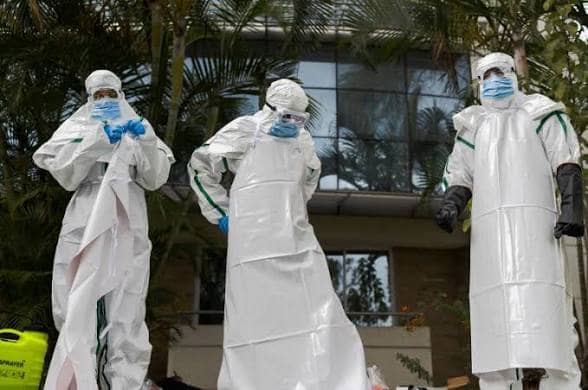
The World Health Organization (WHO) has appealed for increased international support to contain the worsening Ebola outbreak in the Democratic Republic of Congo (DRC), warning that the disease is spreading faster than current response efforts can manage.
Speaking at a press briefing in Geneva on Tuesday, WHO spokesman Tarik Jasarevic said the outbreak continues to outpace available resources, underscoring the urgent need for additional funding and operational support.
“The outbreak is unfortunately still expanding beyond the capacity of the response,” Jasarevic said.
He called on the international community to provide more financial assistance and critical resources to expand treatment facilities, deploy additional field investigation teams, strengthen safe burial operations and support community health workers engaged in surveillance and public awareness.
According to WHO data, the DRC has recorded 3,802 confirmed Ebola infections, including 1,707 deaths. So far, 727 patients have recovered, while 275 suspected cases remain under investigation.
Health authorities are also monitoring approximately 17,000 people identified as close contacts of confirmed cases, with more than 80 per cent receiving daily follow-up assessments to detect possible infections early.
Although the outbreak has spread to five provinces, nearly 90 per cent of confirmed cases are concentrated in Ituri Province in northeastern DRC, with most of the remaining infections reported in neighbouring North Kivu Province.
The Congolese government officially declared the country’s 17th Ebola outbreak on May 15 following a series of deaths linked to the virus in Ituri.
The current outbreak is caused by the Bundibugyo strain of the Ebola virus, for which there are currently no approved vaccines, proven treatments or post-exposure preventive therapies.
However, WHO officials expressed cautious optimism, noting that several clinical trials involving experimental vaccines, antiviral medicines and other potential treatments are underway.
Vasee Moorthy, who heads the WHO Research and Development Blueprint Programme, said early findings from the ongoing trials are encouraging and could help strengthen future efforts to combat the disease.
Ebola is a highly contagious viral haemorrhagic fever transmitted through direct contact with the blood, bodily fluids or tissues of infected people. The disease can also spread through contact with contaminated surfaces and objects, making rapid detection, isolation and community engagement essential to controlling outbreaks. Mortality rates vary depending on the virus strain and the availability of timely medical care.