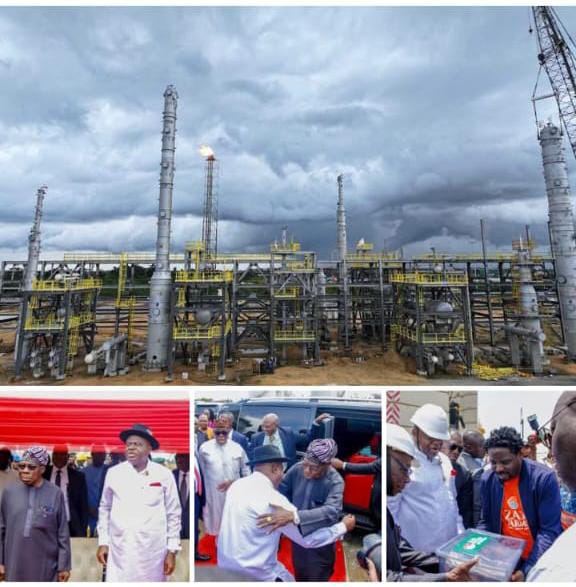
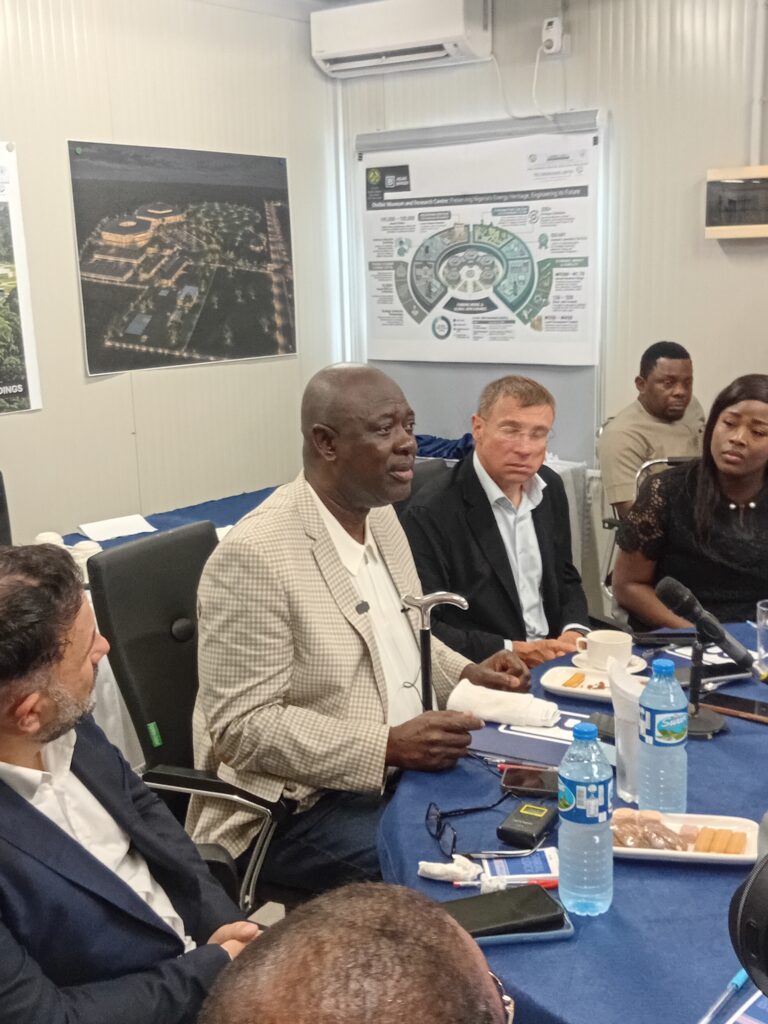
The Minister of State for Petroleum Resources (Oil), Senator Heineken Lokpobiri, has said the Oloibiri Museum and Research Centre (OMRC) will preserve Nigeria’s petroleum history and project the country’s oil and gas heritage to the world.
Lokpobiri stated this during an inspection visit to the project site at Oloibiri, Ogbia Local Government Area of Bayelsa State, where Nigeria’s first commercial oil discovery was made in 1956.
The Minister expressed satisfaction with the quality and scale of work done so far, describing the project as a national masterpiece that will serve as a centre for research, exhibitions, tourism, conferences and international engagement.
He said the museum project had remained on the drawing board for decades until the present administration revived it, noting that Nigeria cannot tell its complete history without recognising the pivotal role of Oloibiri in the evolution of its oil and gas industry.
Lokpobiri disclosed that about N70 billion has already been paid under the first phase of the project and assured that the Federal Government will continue to meet its financial obligations to prevent delays.
He reaffirmed government’s determination to deliver the project by 2028, adding that he would embark on regular visits, including unannounced inspections, to ensure the project remains on schedule.
The Project Manager, Botha de Bruyn, reaffirmed the contractor’s commitment to delivering the project in accordance with approved designs, specifications and timelines.
De Bruyn said the construction team recognises the historical significance of the museum and will continue to work closely with the Federal Government, host community and other stakeholders to sustain the momentum of work.
The Project Director, Architect Ladipo Lewis, said the museum was conceived to immortalise Oloibiri as the birthplace of Nigeria’s oil and gas industry.
According to him, the facility will document the history, culture, environment, technology, tourism and heritage of Oloibiri, as well as developments in the upstream, midstream and downstream sectors.
Lewis explained that the complex will feature galleries, archival spaces, laboratories, a research centre, auditorium, restaurants, shopping facilities and outdoor oil and gas exhibits.
He said the main museum building covers more than 10,500 square metres, including over 4,000 square metres of gallery space, while the research centre and laboratories occupy over 5,400 square metres.
Providing an update on construction, Lewis said the project has attained over 15 per cent completion, with more than 580 foundation piles driven over 17 metres into the ground.
He said the concrete slab for the main museum building has been completed, while columns for the mezzanine and upper floors are being erected. Oil Wells 1 and 2 have reached roofing level, the accommodation facility has been roofed and fitted with windows, while the health centre and perimeter fencing are practically completed.
He added that the major waterway in front of the site has also been completed.
Lewis said that beyond preserving history, the completed facility will catalyse tourism, research, employment, local content development and economic regeneration in Oloibiri and the wider Niger Delta.
He noted that the surrounding environment offers opportunities for eco-tourism and wildlife research, with future plans including hotels, conference centres and other tourism-related infrastructure.
“This is an opportunity to engage the entire world and put Oloibiri on the map of the world,” he said.